Gemaakt door AIVerbeterd door mensen
Riqli · levende documenten · continu bijgewerkt
Waar AI-kennis menselijke praktijk ontmoet.
Delen met vrienden

ATPL 032 Performance. Hard skill. (Aviation. Ground training. ATPL. Performance. Tutorial. Practice.)
In case of standing water on the runway, the take-off distance (1) ___ and accelerate-stop distance (2) ___.
(1) increases; (2) increases.
In the presence of standing water on the runway, both the take-off distance and the accelerate-stop distance increase. This occurs (among other factors) due to the reduction in tire-to-runway friction, which affects both the acceleration during the take-off roll and the aircraft’s ability to stop safely in the event of an aborted take-off. For the take-off distance, reduced friction leads to lower acceleration rates, meaning it takes longer to reach the required lift-off speed. Additionally, standing water increases the risk of hydroplaning, which further degrades traction and can prolong the ground roll. As for the accelerate-stop distance, standing water decreases braking effectiveness. Reduced runway friction results in lower deceleration rates, making it harder to bring the aircraft to a stop within the available distance.
(1) decreases; (2) decreases
(1) decreases; (2) increases
(1) increases; (2) decreases
Two similar aircraft of different masses are climbing at the same climb angle. Which of the following statements is true?
The heavier aircraft will climb faster.
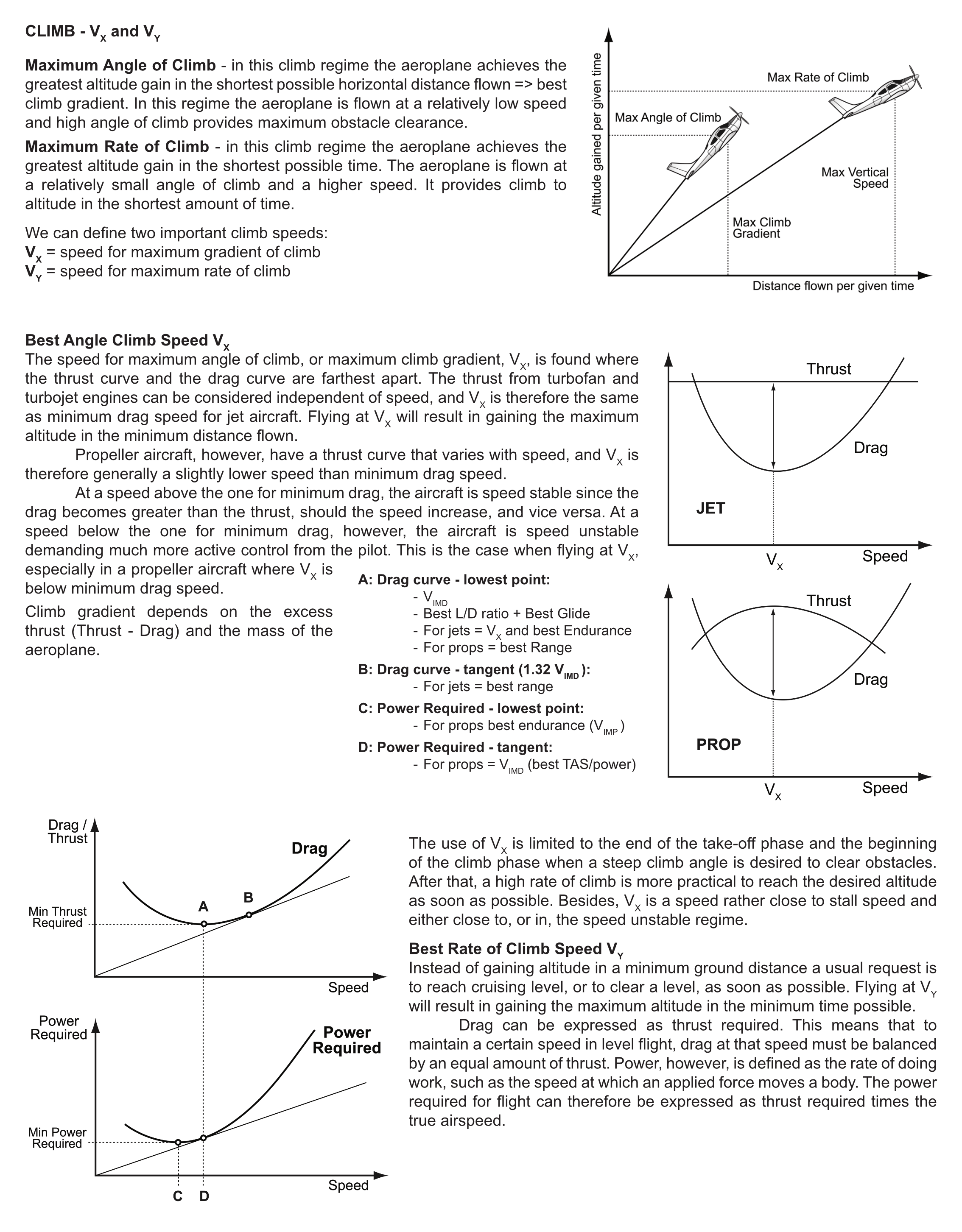
Refer to figure 272. A heavier aircraft will require a greater lifting force than a lighter aircraft to sustain itself in the air. In accordance with the lift formula, the lift can be increased by either increasing the climb angle or increasing the airspeed. The question tells us both aircraft are maintaining the same climb angle, therefore the only way the heavier aircraft can follow the same climb angle is by flying at a higher speed, compared to the lighter aircraft. Think of the lift formula: L = 1/2 ρ V2S CL . A heavier aircraft will require a higher amount of lift to maintain the same climb gradient. Therefore in accordance with the formula, presuming all other variables remain the same, the only way to increase the lift is to increase V, the speed.
The heavier aircraft will climb slower.
The lighter aircraft will climb faster.
Both aircraft must climb at the same speed in order to maintain the same climb angle.
Consider a piston-engine airplane in straight and level flight. The maximum achievable indicated airspeed (IAS)...
decreases with altitude.
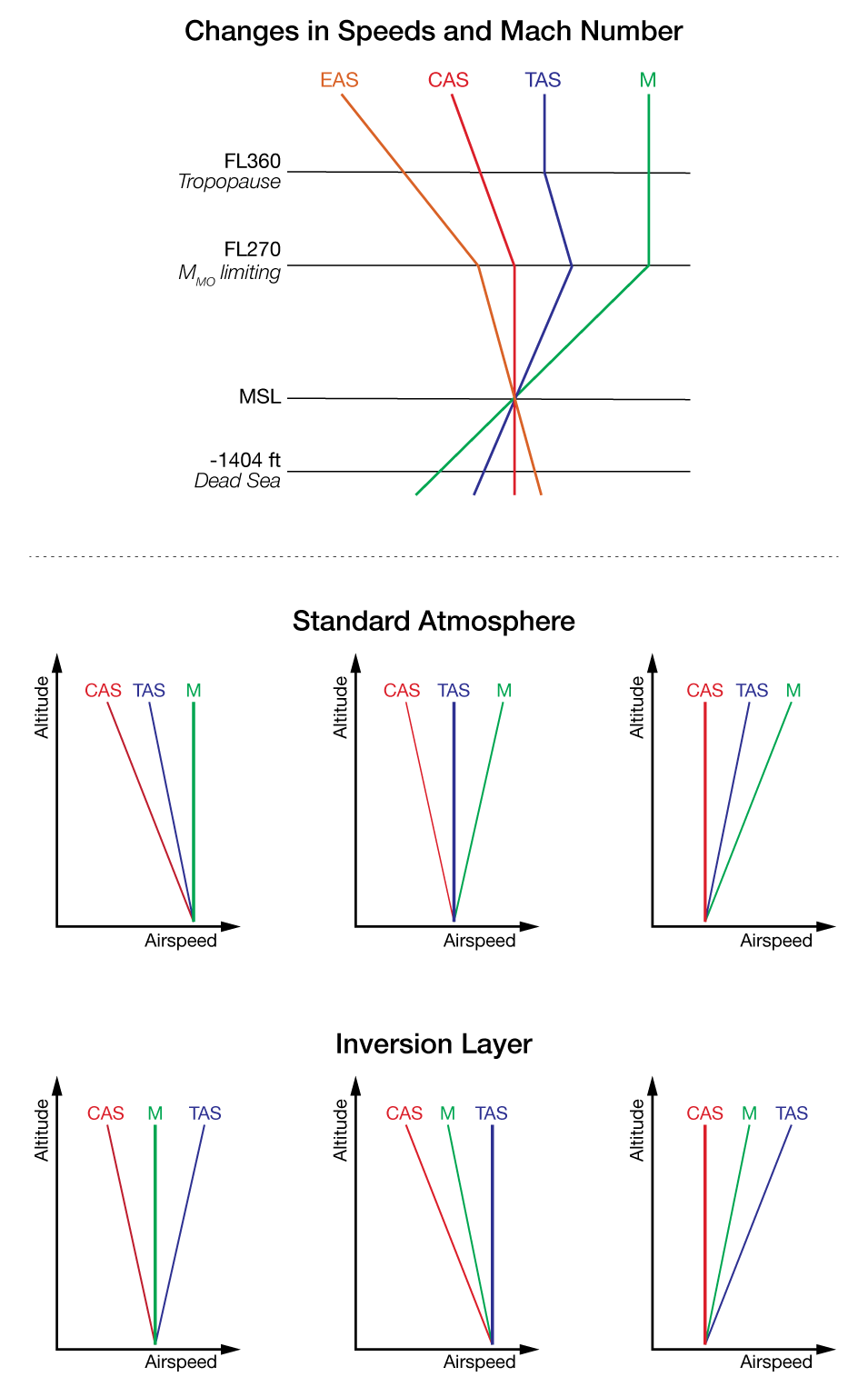
Refer to figure 216. Indicated air speed (IAS) is measured directly by the pitot/static system (the difference between the total and static pressure) and is proportional to the air density. Air density decreases with increasing altitude, therefore the maximum achievable IAS decreases with increasing altitude, too.
decreases until transition altitude and remains constant thereafter.
increases with altitude.
increases until transition altitude and remains constant thereafter.
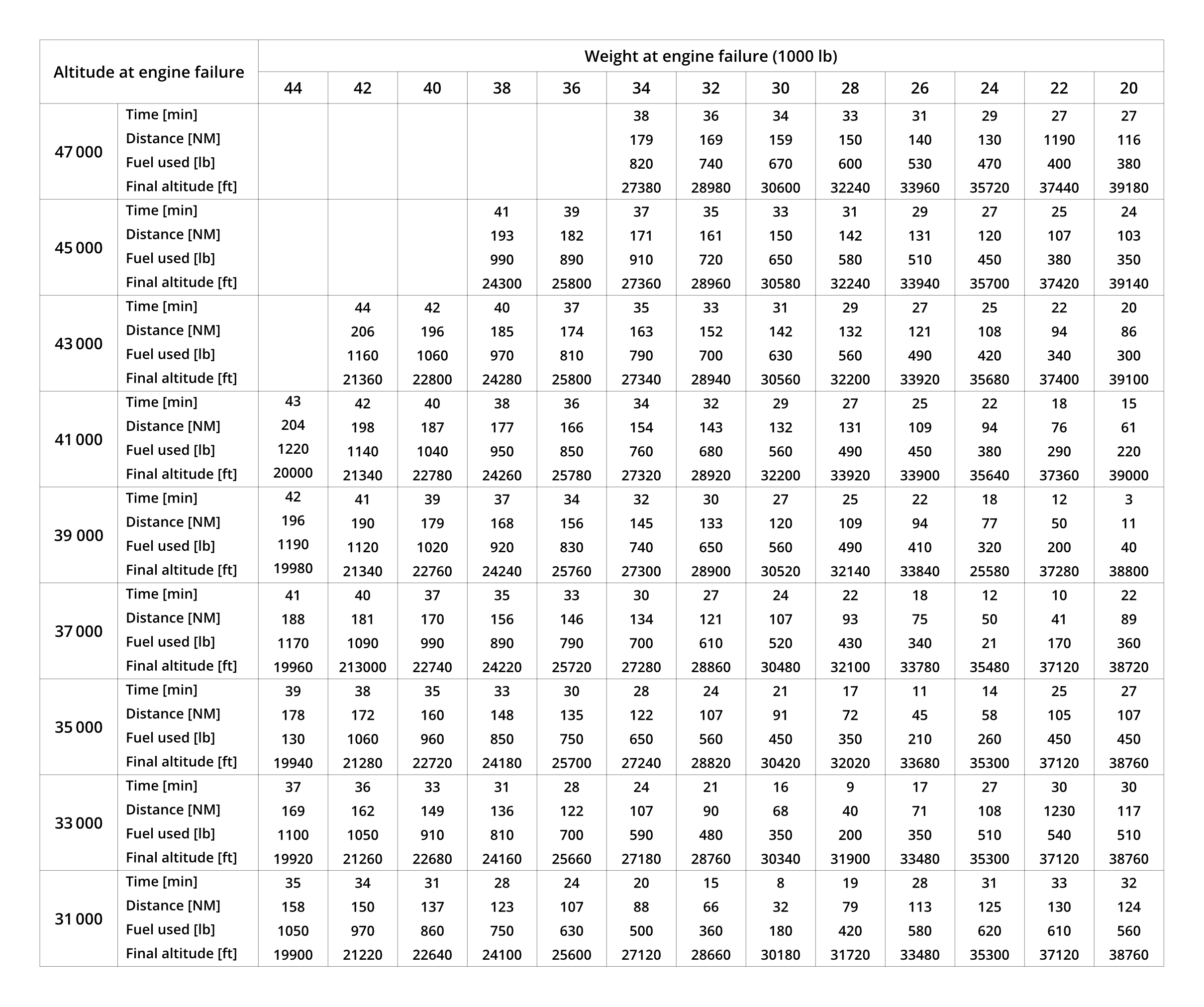
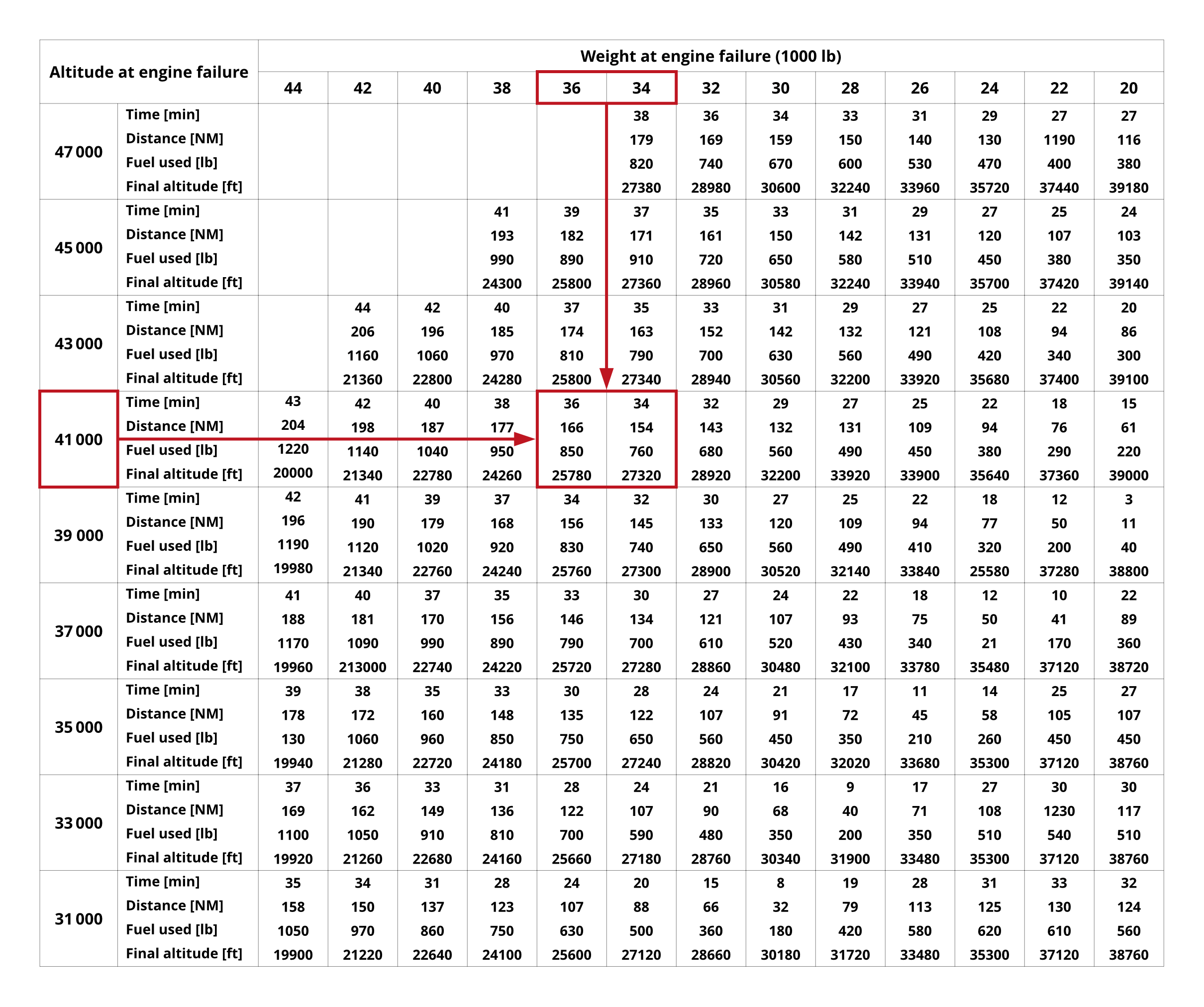
Refer to figure 032-91. Determine the time taken (1) ___, the fuel used (2) ___, and the distance travelled (3) ___ to stabilizing altitude for an aircraft that has experienced an engine failure. The engine failure happened at 41 000 ft with an all-up weight at the point of failure of 35 000 lb.
(1) 35 minutes; (2) 805 lb; (3) 160 NM
Refer to figure 2538. By interpolation, the time taken, fuel used and distance travelled amount to: (1) 35 minutes; (2) 805 lb; (3) 160 NM
(1) 27 minutes; (2) 170 lb; (3) 165 NM
(1) 29 minutes; (2) 780 lb; (3) 165 NM
(1) 35 minutes; (2) 155 lb; (3) 805 NM
Which of the alternatives represents the correct relationship?
VMCG and V1 should not exceed VR.
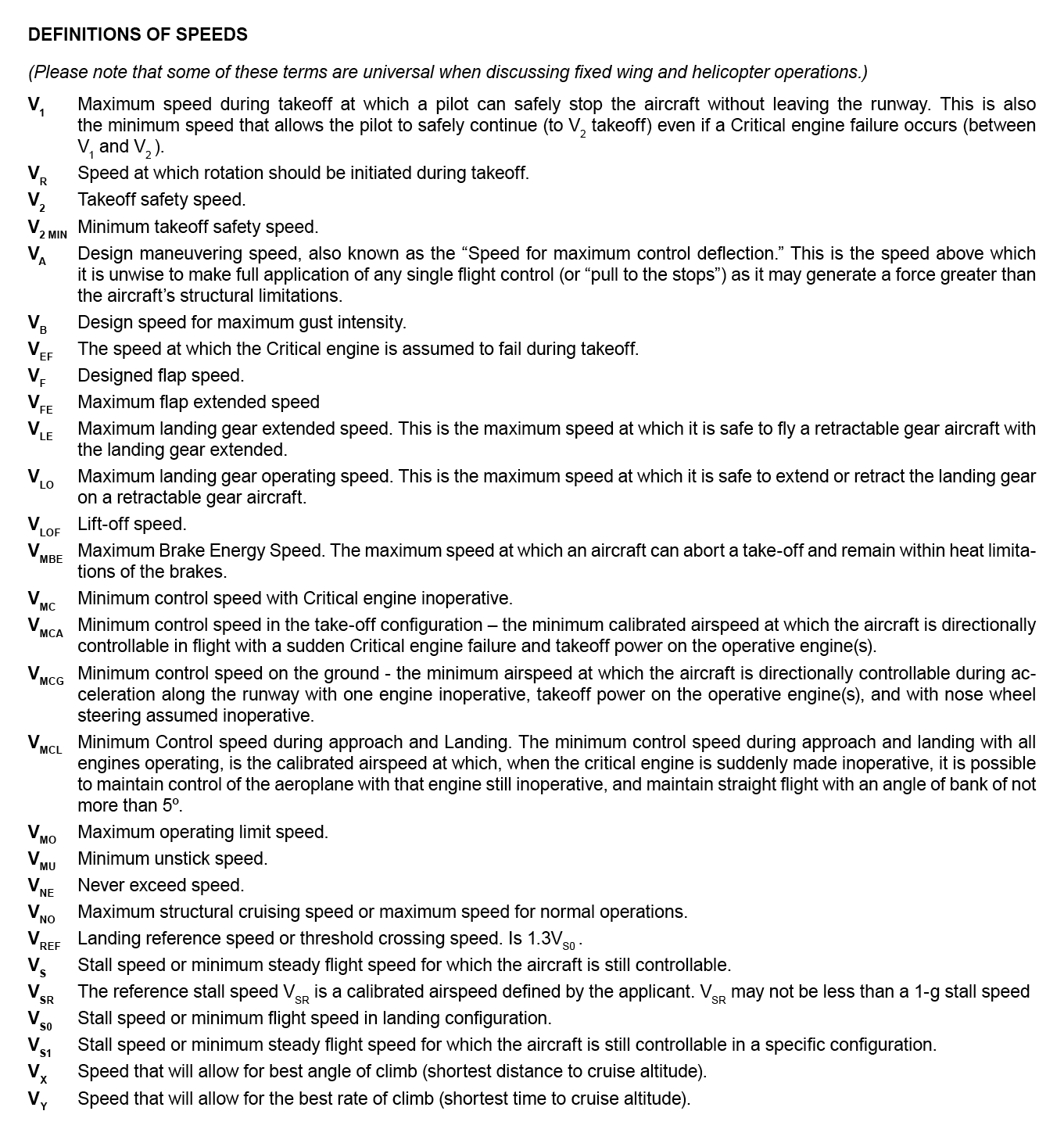
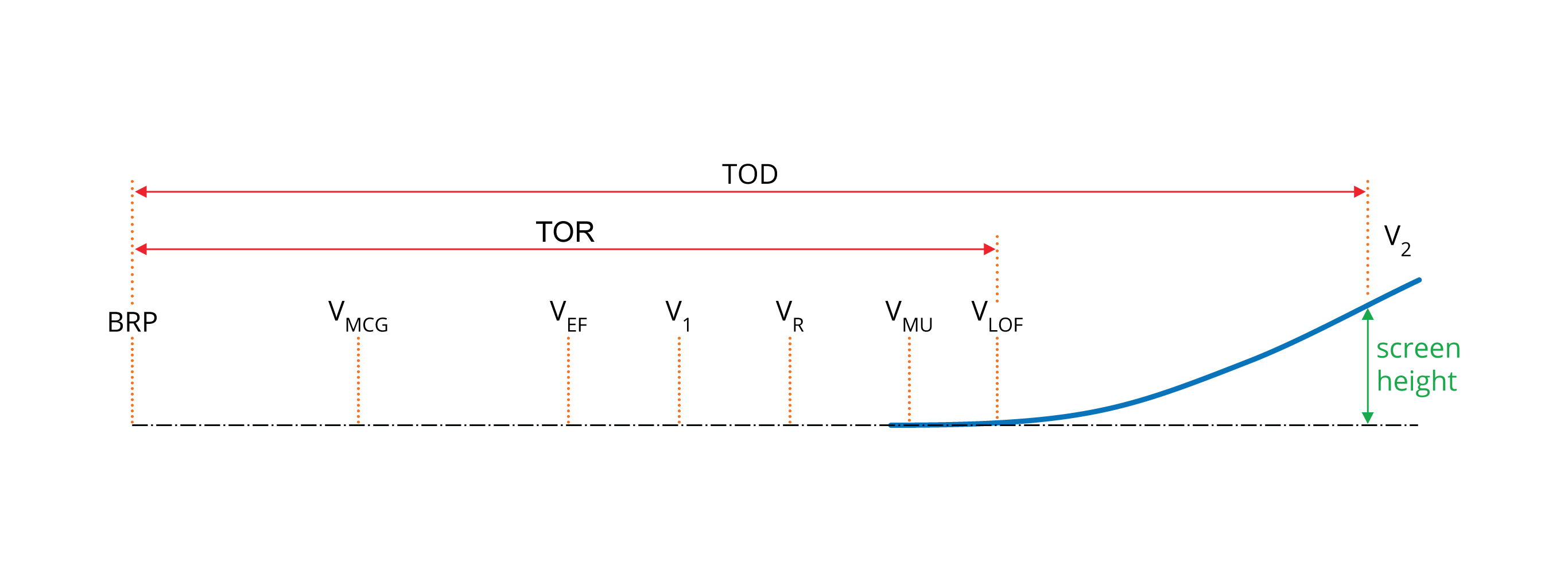
Refer to figures 267 and 266. The decision speed, V1, cannot be above VR, it makes no sense to make the decision to take-off after you have already taken off. Likewise, VMCG cannot be above VR. This is because VR itself should already be above VMCA, which is above VMCG, so VMCG cannot possibly be above VR. 'V1 and Vmcg should not exceed V2' is deemed incorrect because V1 and VMCG not only should not exceed V2, but they cannot even be equal to V2 – they must actually be less. We realise saying they shouldn’t exceed V2 in itself is not an incorrect statement, but according to our latest feedback from those who sat the exam, this was offered as an answer option and it was incorrect. The ‘more correct’ principle seems to apply for this question. V1 = Take-off decision speed. It is the maximum speed during take-off at which a pilot can safely stop the aircraft without leaving the runway. This is also the minimum speed that allows the pilot to safely continue (to V2 take-off speed) even if a Critical engine failure occurs (between V1 and V2). If engine failure occurs before V1 the pilot must stop (abort the take-off), because there might not be sufficient distance to accelerate and safely continue the take-off on the remaining engine while clearing obstacles. If engine failure occurs after V1 the pilot must continue the take-off, because there might not be sufficient runway length remaining to safely stop the aeroplane if take-off was aborted. V1 may not be less than: • VMCG V1 may not be more than: • VR • VMBE VR = Speed at which rotation should be initiated during take-off. It may not be less than: • V1 • 1.05 VMC VLOF = Lift-off speed. V2 = Take-off safety speed (free air safety speed). It is the minimum speed which the aircraft is legally required to achieve on reaching the screen height (35 ft for performance class A aeroplanes) with one power unit inoperative. It is the lowest safe climbing speed. The exact V2 speed is determined by the take-off weight and the flap setting. V2 will also vary with aerodrome elevation and temperature. V2 decreases with increased ambient temperature and/or aerodrome elevation and/or increased flap setting up to the specified maximum for take-off. V2 MIN = Minimum take-off safety speed. It may not be less than: • 1.13 VSR for turbojets and 2 and 3 engined turboprops • 1.08 VSR for turbojets with with provisions for obtaining a significant reduction in the one-engine-inoperative power-on stall speed and 4 engined turboprops • 1.1 VMCA Note: VS is the stall speed - it is defined by EASA CS-Definitions document and it is used for small aeroplanes - performance class B (EASA CS-23 certified). VSR is the reference stall speed (about 6% higher than VS) - it is defined by EASA CS-Definitions document and it is used for large aeroplanes - performance class A (EASA CS-25 certified).
VMCA and VR should not exceed V1.
V1 and VMCG should not exceed V2
VMCL and V1 should not exceed VR.
Reduced take-off thrust should normally not be used when:
anti skid is not usable.
Reduced take-off thrust increases take-off distance, and thus acceleration-stop distance. If anti-skid is inoperative, the cumulative effects of reduced T/O thrust and longer stopping distance are too important.
the OAT is ISA +10 °C.
the runway is wet.
it is dark.
What can be said about the gliding characteristics of these two identical aircraft? Aircraft 1: 900 kg Aircraft 2: 1 200 kg
Both aircraft have the same gliding distance but aircraft 2 has a higher speed.
Glide ratio (L/D) is determined by aircraft design and is independent of weight for identical aircraft. Heavier aircraft must fly faster to maintain the same angle of attack and L/D ratio. Both aircraft will have the same glide ratio (L/D) since they're identical aircraft. From the same altitude, both will travel the same horizontal distance before reaching the ground = The heavier aircraft will sink faster, but will also fly faster.
Aircraft 2 has a longer gliding distance.
Both aircraft have the same speed but aircraft 1 has a longer gliding distance.
Aircraft 1 has a longer gliding distance.
Which aircraft do the speeds VNE and VMO refer to respectively?
VNE refers to pistons and VMO refers to jets.
Correct Answer: VNE refers to pistons and VMO refers to jets. Explanation: The speeds VNE and VMO are associated with different types of aircraft, and their usage depends on the aircraft's certification category. VNE (Never Exceed Speed) refers primarily to smaller, slower aircraft, typically those certified under CS-23. These are small aircraft with a Maximum Takeoff Weight (MTOW) of 5.670 kg or less, or commuter category aircraft with up to 8.618 kg MTOW. Aircraft in this category, such as piston-engine planes, use VNE to indicate the maximum speed that should never be exceeded during flight. The VNE is typically linked to the VNO (Normal Operating Speed) and is used for aircraft in the slower speed ranges. VMO (Maximum Operating Speed), on the other hand, is used by larger, faster aircraft, generally those certified under CS-25, which includes turbine-powered aircraft like jet and turboprop planes. These aircraft are typically faster and more complex, with higher MTOWs, and use VMO as the maximum speed that should not be exceeded during normal operations. The VMO is often coupled with the MMO (Maximum Mach Operating number) for aircraft that operate at high speeds and altitudes. Thus, VNE is used for piston-engine aircraft or smaller CS-23 aircraft, while VMO applies to turbine-powered aircraft, including jet aircraft under CS-25 certification.
They can both refer to piston and jet aircraft.
They both apply to piston jet aircraft only.
VNE refers to jets and VMO refers to pistons.
Occasional movements by aircraft with an ACN of 50 should not adversely affect the pavement if the reported PCN is at least: