Created by AIImproved by people
Riqli · living documents · updated continuously
Where AI knowledge meets human practice.
Share with friends
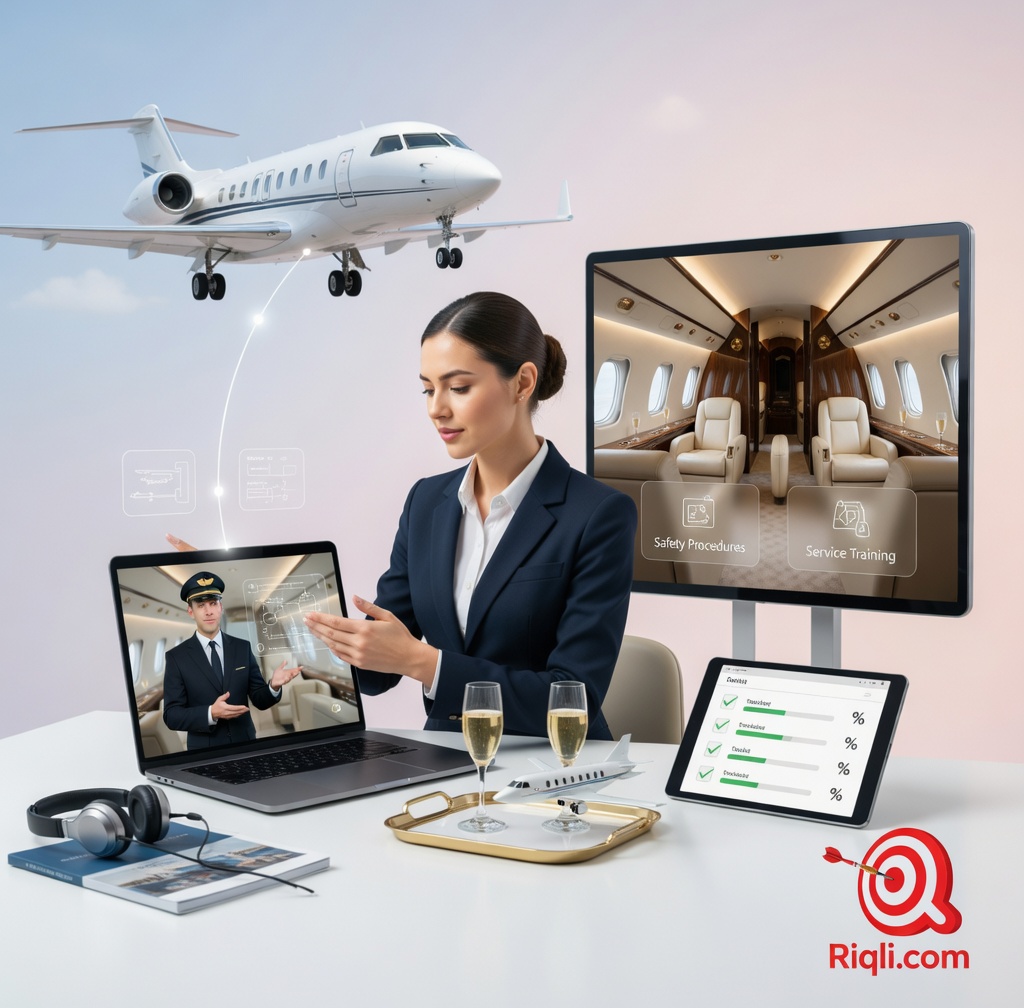
Distance course for flight attendant training
VIP business aviation. Soft & Hard skill
Annotation.
Passenger service in business aviation is not just transportation, but the creation of an impeccable flight experience, where every detail works for comfort, safety and status. This course is designed to transform a flight attendant from an executor into an architect of the flight experience, capable of anticipating the desires of the most demanding clients.
In conditions of growing competition and demand for personalization, mastery of VIP service becomes not an advantage, but a mandatory professional standard. We will cover all aspects: from the subtleties of protocol and psychology to gastronomy, safety and building a personal brand, so that you can confidently work with an international audience. The course solves the main problem of beginners — the lack of systemic knowledge on how to build a career in this closed and elite sphere, and provides a clear roadmap for entering top teams.
Introduction
Goal of the course.
After completing the course, you will be able to independently organize and conduct a full cycle of VIP service on board a business jet, from catering planning and serving dishes to effective communication with international passengers and decision-making emergency situations, meeting global business aviation standards.
Learning outcomes.
- Know: international standards of world-class service (World-Class Service) and technology Luxury VIP services; basics of cross-cultural etiquette and protocol; basic principles of aviation safety and first aid; structure and requirements for documents for employment.
- Be able to: build a dialogue with a wealthy client using effective communication techniques; conduct a cabin presentation (Cabin Presentation) in accordance with the standards; create and serve delicious dishes using the “Plate Art” techniques; accept and control food orders from catering companies; professionally serve premium alcohol using basic sommelier knowledge.
- Have: skills of working with an international audience without borders (Cross-cultural service); tools for building a personal brand and working with social networks (LinkedIn) for job search; techniques for maintaining an impeccable image and corporate etiquette; skills in pre-flight cabin preparation.
Who is this course for.
This course is designed for aspiring and existing flight attendants who want to move into the business aviation segment and serve VIP-level passengers. It will be useful to graduates of aviation schools, commercial aviation flight attendants who want to improve their skills, as well as professionals from related hospitality sectors (hotels, restaurants) who want to master the specifics of working on board private aircraft. The course will provide a solid foundation for those who value attention to detail and strive to become experts in the field of premium service.
The program is not intended for those who are looking for simplified instructions or are not ready to learn a large amount of information about protocol, safety and gastronomy. If your goal is to obtain a non-immersion certificate or you don't plan to work with a demanding international audience, this course may be overkill. We count on motivated students who are ready to invest time in their development and reach a new career level.
Service philosophy and service standards
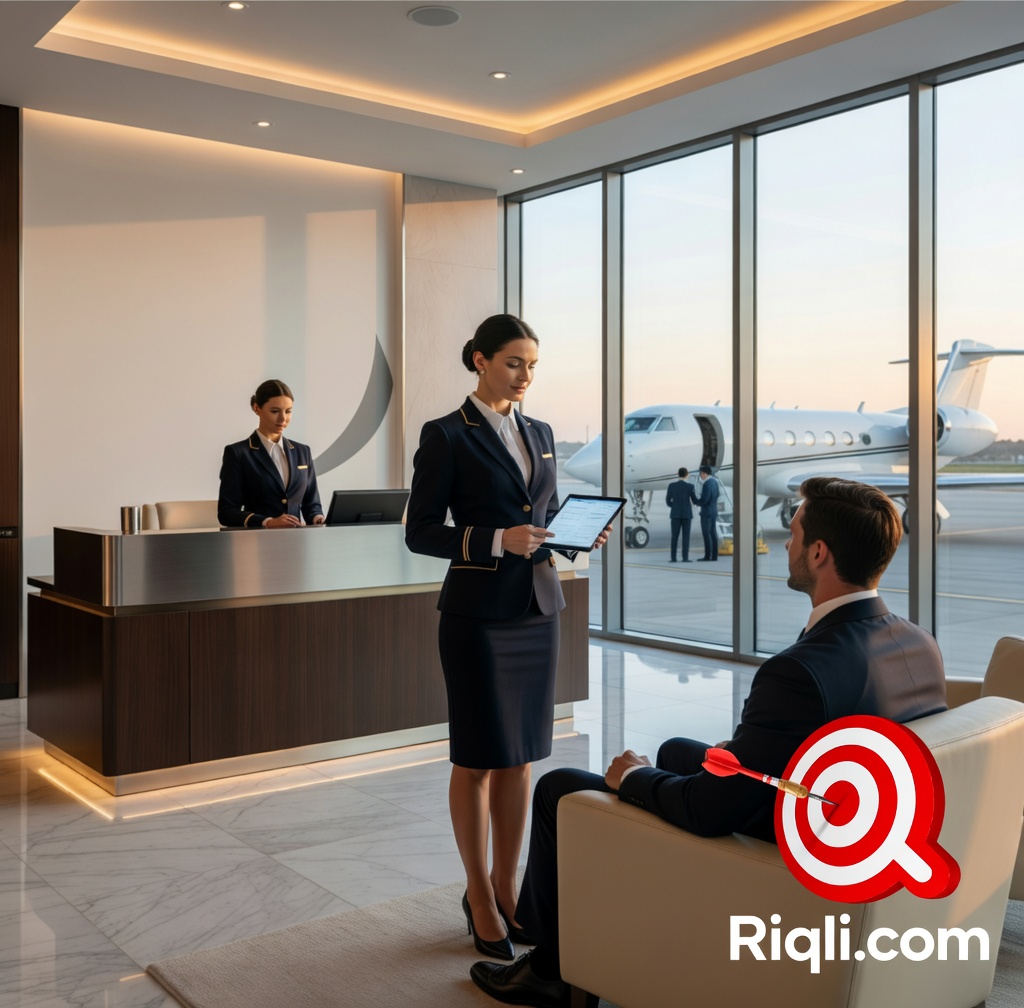
World standards of service. The work of a business aviation flight attendant is based on the concept “The Art of Service” (The Art of Service), which goes far beyond the simple performance of duties. This is a philosophy in which every action, every word and even silence becomes an instrument to create a unique experience for the passenger. World-Class Service (World-Class Service) involves not just meeting basic needs, but anticipating them. A professional must think several steps ahead, noticing unspoken desires and adapting his actions to the client’s current state. This is achieved through a combination of impeccable execution technique (correct serving of dishes, knowledge of protocol) and high emotional intelligence. The key difference is moving from “doing the right thing” to “doing what the individual passenger needs here and now.”
To implement this standard in your work, start by auditing your current skills. Make a checklist of all the procedures you perform on board (from greeting the guest to saying goodbye). Then ask yourself the question: “What am I doing simply according to instructions, and what am I doing with care for the person?” The “personalized greeting” technique is not just “Good afternoon,” but calling by name, mentioning the purpose of the flight or previous interaction experience. Use active listening techniques: pay attention to intonation and body language to understand whether the client wants to communicate or prefers silence. It is important to learn to “read” the guest, offering help when it is really needed, but not imposing it.
Modern training programs recommend systematically practicing “service scenarios”. Play out difficult situations in your mind: how to serve two passengers with different requirements at the same time, how to diplomatically refuse a request that violates safety rules. Remember that in the VIP segment, not only the result is important, but also the process. Avoid the main anti-pattern - “robotic” service, when you follow a script without hearing a real person. Your goal is to create an atmosphere in which the guest feels alone and most important, just like in the best hotels in the world. This is Luxury service.
Personalization in VIP service. Personalization is a key tool that turns standard service into a memorable experience. In business aviation, it is not enough to simply know the passenger's name; it is necessary to understand his preferences, habits and expectations. Start by creating a detailed guest profile: favorite drinks, cabin temperature, dietary restrictions, preferred entertainment. Use this information to make proactive offers—for example, offer your favorite tea before the guest asks. The "anticipation" technique requires attention to detail: if the passenger frequently checks the time, offer information about the arrival time; if he looks tired, offer a blanket and dim the lights. Personalization also includes tailoring communication: for some guests, light conversation is appropriate, for others, minimal intervention. Keep a log of your observations (as part of the privacy policy) to make each subsequent flight even more personalized. Avoid template phrases - they destroy the illusion of an individual approach. Remember that in the VIP segment the guest pays to feel like one and only.
VIP service technology. Service at the VIP level requires the introduction of special technologies that turn the flight into an event. It is a system that includes managing expectations, personalizing the environment and flawlessly executing hospitality rituals. The basic rule is “Don’t keep a guest waiting and never make him ask twice.” All preparations for the flight, from checking the on-board power supply to setting up the lighting and climate control, must be completed BEFORE the passenger appears on the ramp. The technology requires the flight attendant to have a detailed profile of each regular customer (drink preferences, favorite cabin temperature, sleeping habits).
Practical application: create a digital guest card (without violating personal data laws, within an approved system) and record all observations in it. For example, a preference for pillows made of a certain material or a love for a specific type of tea. Use this information before every flight. In business aviation, the initiative of a “surprise” is welcomed - a small but thoughtful gesture, for example, a passenger’s favorite magazine or a special dessert ordered from a caterer without a reminder. This demonstrates the highest level of care.
To work with VIP clients it is important to master confidentiality protocols. Discussion of names and routes on the ground is strictly prohibited. Best practices include the use of individual codes to identify passengers in correspondence and documentation. A tool for managing such data can be specialized flight control platforms that allow you to store notes about preferences within the system, synchronizing them with the schedule. Be prepared to be scrutinized for your actions, from the way you serve a drink to the way you adjust the window shade.
Corporate Etiquette Standards. In the world of business aviation, Corporate Etiquette is the language spoken by a professional. It includes not only manners, but also the ability to properly maintain distance, use formal addresses (sir, madam, master) and flawlessly follow the protocol of meeting and sending off. Etiquette mistakes can destroy trust in a second. For example, the passenger should be the first to offer a hand for a handshake, not the flight attendant. It is correct to open the salon door while standing to the left of the aisle, and be sure to hold it for the exiting guest. Etiquette is not “old-fashioned” rules, but a tool for creating a predictable and safe environment where the passenger feels respected and protected.
Your image and appearance is the first thing that is assessed client. The uniform must be spotlessly clean, ironed and meet the company's strict standards. It's not just clothes, it's part of your personal brand. Accessories - watches, shoes, hairstyle - should be discreet and expensive. It is often recommended to choose classic watch models without a bright design. This shows that you belong to the world of “classic luxury”. Representatives of different sexes have the same requirements for cleanliness and neatness: manicure, fresh breath, light neutral perfume (which does not overpower the smell of food in the salon). Some large companies have strict uniform guidelines, down to the color of socks and tie.
To hone these skills, videotape yourself preparing for a flight. Look at how you move, how you present objects, what gestures you use. Practice a “standard smile” - friendly, but not forced. Study the protocol manuals and practice seating rules in the aircraft cabin. Only constant training turns the rules into natural behavior, and not into a tense game.
Gastronomy and catering on board
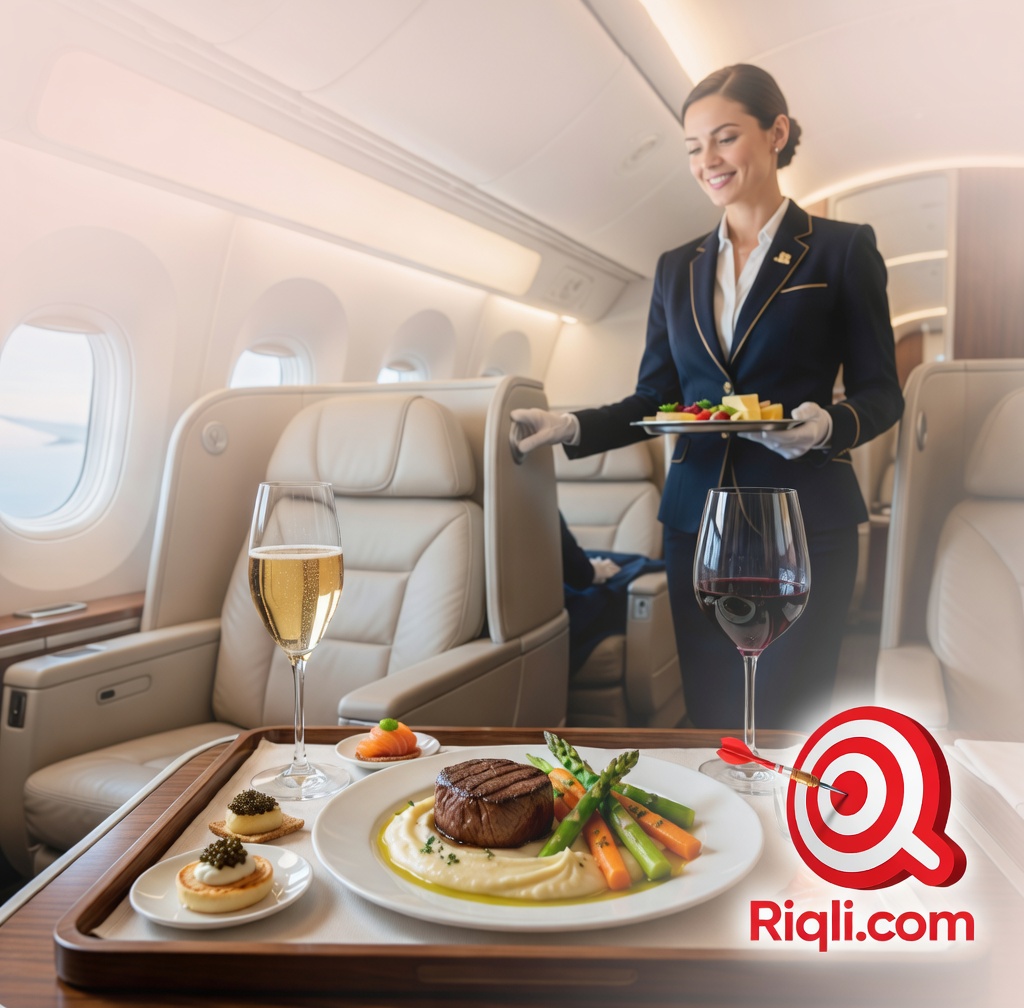
Communication with catering companies. Dealing with catering is a process of managing expectations and quality that begins long before departure. The basic principle: you are not just a transfer link, but a quality expert and coordinator. Your task is to clearly set the task, control the deadlines and check the quality at the reception. Meal Order is not just a list of dishes; This is the coordination of the menu concept, delivery time, packaging and serving requirements. You must be able to translate the passenger’s “wants” into a language that the caterer can understand. For example: “medium rare steak” needs to be refined to the level of “medium, without blood, with a pink core and minimal fat content.”
The algorithm for working with catering includes 5 steps:
1) Receiving a request from a passenger (through the manager or directly). 2) Processing the request and coordinating details with catering (menu, number of servings, serving time).
3) Double checking the availability of all items and dietary requirements (allergies, veganism, halal).
4) Visual and temperature control on board 30 minutes before departure - checking with the waybill, checking the tightness of the packaging and the temperature of the dishes (use food thermometer).
5) Signing the acceptance certificate. Large catering companies have their own online ordering platforms where you can track the status of your order in real time. Use their functionality to create templates for frequent orders.
A common mistake is to rely on verbal agreements. Always ask for written confirmation, even if it's just a messenger. Keep a “catering log” file where you record complaints and successful suppliers for different regions. Please note that in the VIP segment, the quality of service is assessed by how you solve problems: if a dish is forgotten to be delivered, your “Plan B” may be a spare set of gourmet snacks in the refrigerator.
Food culture: from products to presentation. In business aviation food culture has been elevated to the rank of art. This is an understanding of the properties of products, their compatibility, seasonality and impact on well-being at altitude. At an altitude of 10,000 meters, our taste buds become dull: salty and sweet seem less pronounced, and acidity, on the contrary, increases. Therefore, the menu for flights is compiled taking into account these features: dishes with a bright, deep taste and high umami content are used. Products must be the freshest (preferably locally sourced) and properly stored. Hygiene (Food, Beverage & Hygiene) is an integral part of this culture. All surfaces, tools and hands must be treated with an antiseptic. Compliance with the temperature chain (cold - no higher than +5°C, hot - no lower than +65°C) is a critical requirement, as this affects both taste and safety.
Practical recommendations for organizing a “safe table”: always use disposable gloves when serving; warm up plates before serving hot food; Make sure that raw food does not come into contact with cooked food. For premium serving, it is necessary to use special dishes and cutlery from the collections of famous brands (for example, Bernardaud or Christofle), which are scratch-resistant and maintain aesthetics. Remember your guests’ individual food preferences and create a database of “favorite dishes.” This will be your trump card on your next flight. For example, if a guest mentions that they like truffles, next time you can add truffle oil to the sauce, complimenting their taste.
Anti-pattern: Serving complex dishes that require active cutting or cutting when the plane hits turbulence. Plan the menu so that the dishes are convenient for consumption: boneless fish, sliced meat, one-bite snacks. It's safe and elegant. Always have a supply of simple but high-quality products on board: bread, olive oil, parmesan, so that you can quickly assemble an impromptu plate if the guest is hungry and the main course is not ready yet.
Master class “Plate Art”. “Plate Art” is an artistic serving technique that turns a plate into a canvas. In business aviation, where space is limited and meal times are often compressed, the visual component plays a key role: it sets the tone for the entire meal. The main principle of “Plate Art” is minimalism and clear lines. Don't try to fill the entire plate; leave about 30% free space for “air”. Use tall shapes and vertical structures (vegetable towers, puree mounds) to create volume. Color contrast is your main ally: red tomato, green basil, white yogurt, black truffle. It's not just beautiful, it awakens the appetite on a biological level.
To practice the skill, start with the basic elements of the house. Use round metal ring molds to create perfect circles of rice or puree. Learn to make "quenelles" - oval mousse or pate shapes - using two spoons. Practice the sauce painting technique: Using a spoon or spray bottle, apply a sauce (such as pesto or barbecue) along the edges of the plate, creating dynamic lines. Microgreens and edible flowers (pansies, nasturtiums) are a great and inexpensive way to add texture and color. Large catering companies offer masterclasses, but you can use video tutorials on platforms.
Critical skill: speed. In flight, the feeding time is limited. Practice assembling the plate until it becomes automatic so that it takes you no more than 2-3 minutes for each dish. Use non-slip trays. Always check how the dish looks under on-board lighting (it's often cooler than home lighting). Avoid placing too much liquid on the plate, which could splash when the plane moves. Instead of puddle sauce, use gel or air foams. It's sustainable and modern.
Masterpieces of world gastronomy. A journey of tastes is the ability to tell a story through food. VIP passengers are often people who have traveled all over the world, and they value not only taste, but also authenticity. Your task is to know the basics of the key cuisines of the world: French, Italian, Asian (in particular Japanese and Thai), Middle Eastern. Understand their key ingredients and cooking techniques. For example, in Asian cuisine, the balance of sweet, sour, salty and spicy is critical; in French - rich sauces (demi-glace, béarnaise) and slow simmering technique. This will allow you not only to correctly accept the order, but also to recommend dishes if the passenger finds it difficult to choose.
Expand your horizons by visiting gastro zones and restaurants Premium Class. Write down your impressions of the dishes so you can describe them to your guests. Study the vocabulary of a sommelier and taster: the “body” of a wine, the “minerality” of a cheese, the “spice” of a dessert. Know what goes with what: Pinot Grigio goes best with risotto with porcini mushrooms, and rich Cabernet Sauvignon goes best with marbled beef steak. Create a small “encyclopedia of tastes” on board - a folder with descriptions of popular catering dishes that you can show to your guest. This demonstrates your professionalism and attention.
Practical advice: make it a rule to try a new dish or drink every week and write a meaningful description of it in three words. For example: “Tom yam - FIRE, SOURCE, HERBS.” This trains your memory and helps you quickly select characteristics. Knowledge of food trends (such as the move towards local food and sustainability) will also set you apart from other candidates. Discuss the origins of the products with guests (“this salmon is raised in Norway”, “those truffles come from Piedmont”) - this creates an exclusive atmosphere.
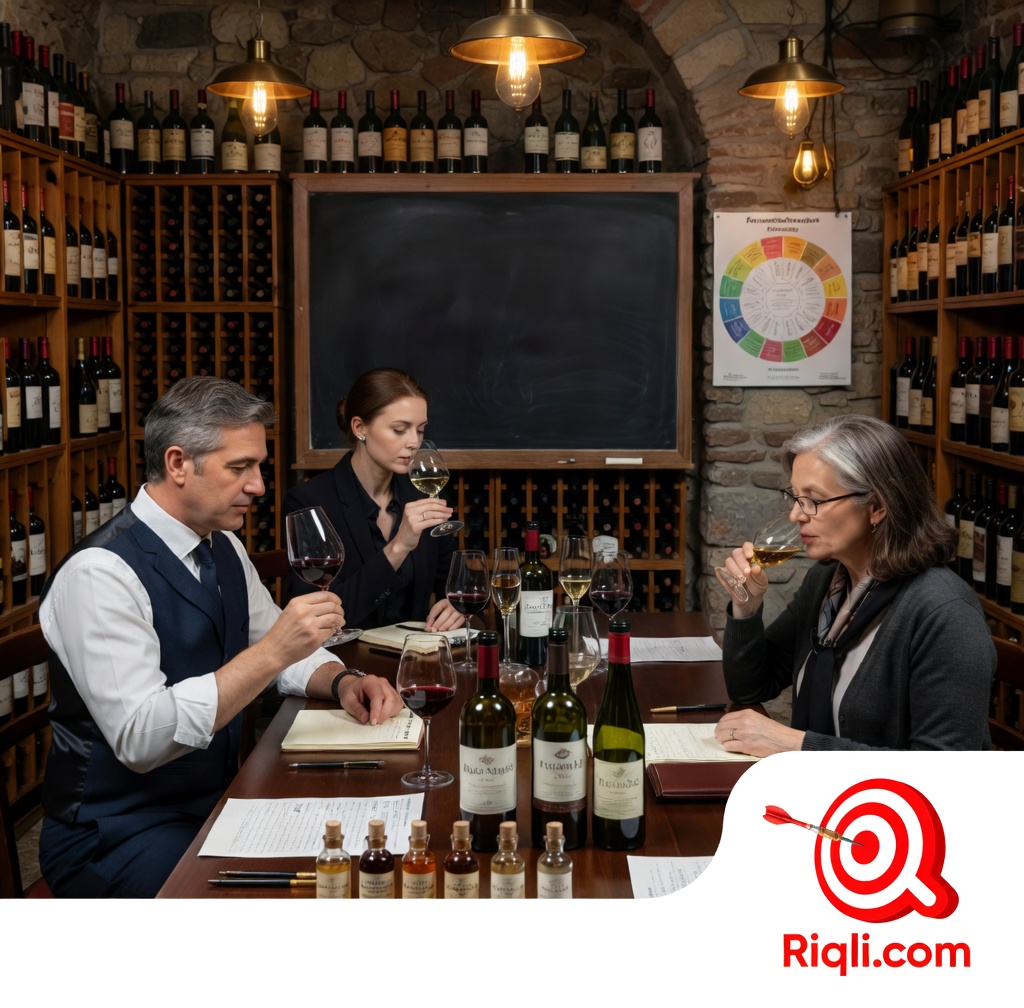
The Art of Drinks: Basic Sommelier Course
The art of drink selection. In a world of premium spirits and soft drinks, knowledge is power. The basic sommelier course for a flight attendant is not about tasting exams, but about confident choice, proper storage and competent presentation. You must be able to navigate the main categories: champagne/sparkling, white/red wines, cognac/armagnac, whiskey/bourbon, gin/vodka. Understanding the region (Bordeaux, Burgundy, Tuscany, Napa Valley), grape (Chardonnay, Pinot Noir, Cabernet Sauvignon) and aging is the foundation. It is also important to know that there are best years (millesimes) for champagne and how they affect the taste.
Algorithm for choosing a drink at the request of the guest: 1) Specify the category (aperitif, main course, digestif). 2) Offer 2-3 options ranging from, for example, $200 to $500 per bottle, with a brief profile description: “We have Sancerre from Didier Dagueneau - bright, mineral, with citrus notes.” 3) After choosing - correct preparation: cooling to the desired temperature (champagne +6°C, white +8-10°C, red +16-18°C). 4) Uncorking and serving: for sparkling wines - silent opening, for aged wines - decanting. Use bottle thermometers and stainless steel wine buckets.
Modern tools: Apps like Vivino help you quickly get information about wine. Keep bookmarks with wine ratings on your phone. The cardinal rule for being a successful bartender/sommelier on board is to never pour too much (a standard sip is 150ml for wine). Your task is to give it a try and get approval. If the guest says “to suit your taste,” suggest the wine that goes best with the main course.
Practice of serving drinks. The ritual of serving drinks in VIP aviation is an art in itself. It begins with preparing the glass: the glasses must be spotlessly clean, free of streaks and fingerprints, polished with a special cloth (lint-free). Each drink has its own glass: a flute for champagne (preserves bubbles), a large glass for red wine (for aeration), a tumbler for whiskey with ice. Always hold glasses by the stem or bottom to avoid heating the glass. This is a rule of hygiene and etiquette that is highly valued in Luxury service.
The sequence of actions when serving champagne: 1) Show the bottle to the guest, naming the vintage and house (for example, Dom Pérignon 2012). 2) Carefully remove the foil and wire bridle, holding the stopper with your hand. 3) Unscrew the plug without making a “pop” (the release of gas is considered a sign of inexperience). 4) Wipe the neck with a napkin. 5) Pour a little into the guest’s glass for testing, and then top up to the middle of the glass. 6) Place the bottle in a bucket of ice and water (1:1 ratio) next to the guest or on a special rack. For whiskey on ice: put 1-2 cubes of “spherical” ice in the tumbler (it melts more slowly), pour 50 ml of the drink. Offer water or soda separately.
Advanced Skill: The Art of Drip Service. Make sure that the guest's glass is never completely empty - offer a top-up when the level drops to 1/3. To do this, you should always keep the bottle at hand. Be sure to offer snacks for drinks: for wine - cheeses or canapés, for champagne - oysters or light snacks, for whiskey - chocolate or cigars (if allowed). Don't forget about non-alcoholic alternatives: an elaborate lemonade with rosemary and pomegranate or a non-alcoholic Mojito should also be served with the same care as expensive alcohol.
Communication and psychology of service
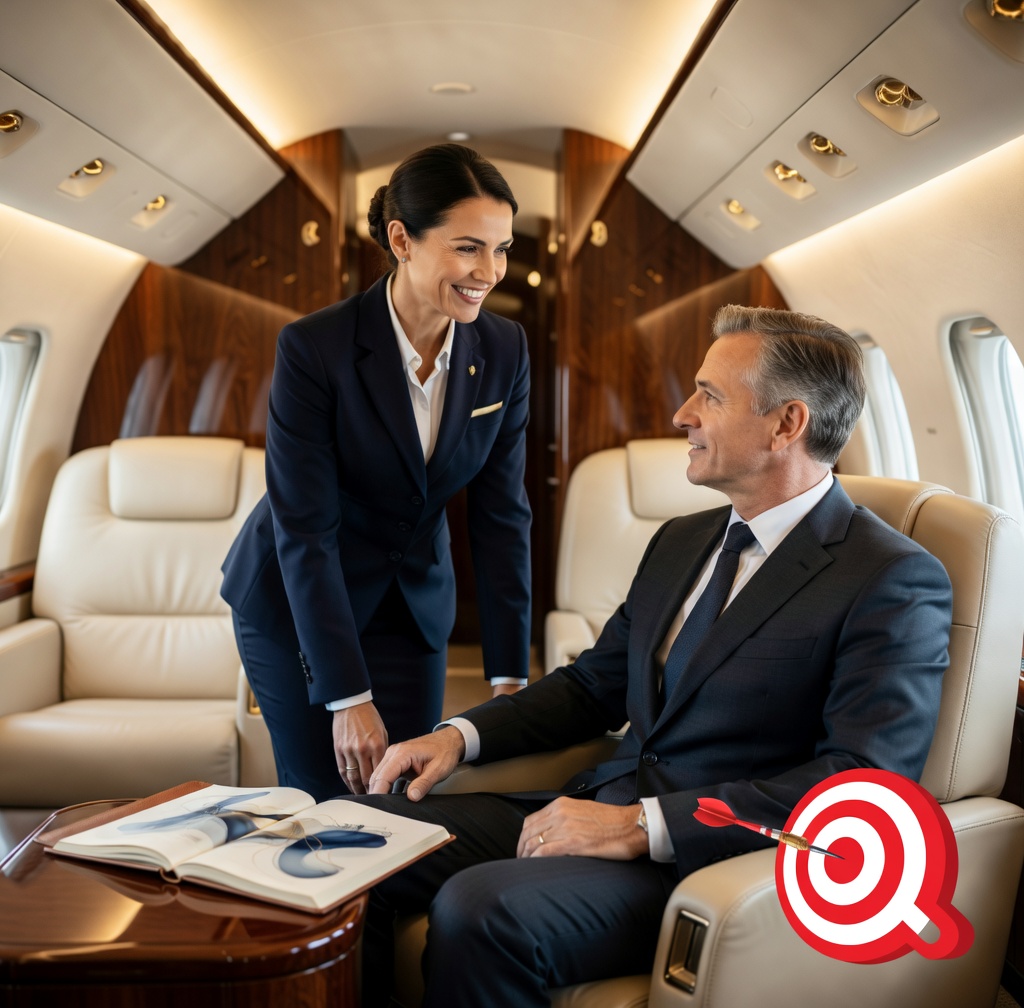
Skills for effective communication with VIP clients. Communication is the heart of the service. Working with a VIP audience requires special skills: the ability to listen, ask the right open-ended questions and read non-verbal signals. Your dialogue should be built on respect, but without servility. The main rule: offer, don't ask. Instead of “Would you like coffee?”, say: “I can offer you a freshly brewed espresso or a cappuccino with vanilla syrup, which do you prefer?” This relieves awkwardness and shows your willingness. Learn the technique of “mirroring” - repeating the client's last words to confirm understanding. This is especially important when working with an international audience where there may be language barriers.
Deep Technique: “Anchoring” Positive Emotions. Notice what makes the guest smile (mention of family, travel) and gently return to this topic during the flight. This creates a feeling of warmth and trust. Practice answering difficult questions (“Why the delay?”, “Can I do this?”). Answer clearly, to the point, but with empathy: “Unfortunately, the delay is due to weather conditions at the destination, but we are doing everything to reduce the wait. Would you like to take a hot shower in the terminal?” Turn negativity into a constructive direction.
Use books on emotional intelligence to develop these skills. Practice dialogues with colleagues, modeling different types of passengers: a silent businessman, a capricious star, an anxious passenger. Each needs its own approach: more information and predictability for the anxious, respect for personal space for the businessman, and bright positive emotions for the star.
The psychology of a wealthy person. To effectively serve the wealthy person, you need to understand his motives and expectations. Such people highly value their time and privacy. They do not like to be distracted by trifles, but expect an immediate solution to any problems. They pay not for food or flights, but for predictability, security and a sense of importance. Psychologically, this manifests itself in a high level of detail requirements and low tolerance for errors. Therefore, your task is to be an “invisible” assistant: to solve problems before the guest finds out about them. If the client is nervous, give him space; if he is sociable, maintain a light conversation about neutral topics (weather, business news, cultural events).
Working with requests “behind the scenes”: often wealthy people do not directly talk about their desires, they give “hints”. This is the art of understanding them. For example, if a guest frowns in bright light, suggest darkening the windows. If he looks at the menu for a long time, ask if he wants something special and tell him that you can prepare a dish not listed on the menu. It is this level of proactivity that turns service into art. Errors at this level are fatal: “I thought he wanted...” - no, you must be sure, so clarify tactfully.
Practical advice: create a mental “state map” of the guest. First, assess his physical state (tired, cheerful), then his emotional state (irritated, happy) and, finally, the level of desire to communicate. It's just 3 steps that take 10 seconds. Constantly analyze this map during the flight to adjust your behavior. Learn the basics of neuro-linguistic programming (NLP) - visual, auditory, kinesthetic - to select keywords and gestures.
Etiquette for working with an international audience. Cross-cultural service (Cross-cultural service) is the ability to adapt to the cultural and national characteristics of guests without losing your style. The world of business aviation is international: yesterday you served a sheikh from the UAE, today an Asian tycoon, and tomorrow an American star. Each culture has its own taboos, rules of greeting and communication. For example, for representatives of Asian cultures (China, Japan), hierarchical order and respect for elders are important; you must serve drinks to the most senior person first. For Arab guests, separate service and the exclusion of pork and alcohol are important. Western guests (USA, Europe) often value directness and tight deadlines.
Algorithm for preparing for a flight with international crew or passengers: 1) Find out the country of origin and religious holidays (for example, Ramadan) to plan meals correctly. 2) Learn basic greeting phrases in the guest’s language (“Hello”, “Thank you”, “Please”) - this shows respect and creates sympathy. 3) Remember cultural taboos: for example, in Muslim countries the left hand is considered unclean, serve everything with the right hand. 4) Be prepared for different communication styles: in some cultures (Germany, Switzerland) facts and clarity are valued; in others (Middle East), personal connections and rituals.
For in-depth knowledge, use cultural anthropology resources and courses. It will help you understand how people from different cultures perceive time, criticism and hierarchy. Keep your diary of observations of different cultures, write down successful and unsuccessful cases. This will create your personal database making you an expert. The main thing is to remain flexible and tolerant, always looking for a way to “connect” with a person through his cultural code.
Personal brand and career growth

Personal brand of a professional. In business aviation, your personal brand is your ticket to the world of top teams. This is a unique set of your competencies, appearance, manners and reputation. It is not built around big words, but around your actions and results. Start by creating a clear positioning: “I am a flight attendant who provides impeccable service and peace of mind on board.” This is your promise that you reaffirm on every flight. A brand helps you stand out among hundreds of candidates—employers will recommend you to each other. Your brand starts with your appearance and your voice, the way you hold your back and give compliments.
Digital Brand Tool: Professional Profile in LinkedIn. It is the premier social network for business aviation. Fill out the profile completely: a high-quality photo in the form, a detailed description of the experience using keywords (“Business Aviation”, “VIP Service”, “Cabin Safety”, “Catering Management”). Write posts about your professional observations, but without disclosing confidential information. For example: “Advice on choosing wine for a business dinner” or “How to prepare the cabin for a long flight.” Interact with content from other professionals and recruiters.
Offline brand: your behavior on the airfield and in the hotel. Always be friendly to FBO staff, pilots and agents. They are your “witnesses” of professionalism. Remember that recommendations from colleagues often decide your fate when applying for a job. Learn to speak at small events to develop confidence in your voice. Your goal is to become “the go-to person for any problem on board.”
Preparing for a business aviation interview. How to qualify for top teams is a separate skill that requires special preparation. A business aviation interview is a stress test that tests not so much your theoretical knowledge as your reaction, manners and emotional stability. Prepare for tricky questions: “What will you do if a passenger insults you?”, “Give an example of a conflict on board and how you resolved it,” or “What is your biggest mistake?” Answers should be structured using the STAR (Situation, Task, Action, Result) technique - this is the standard for behavioral interviews.
Important Requirements and Red Flags: Employers look for the cleanliness of your appearance, the condition of your uniform, your posture and eye contact. Be prepared for professional aptitude tests (psychological tests for stress resistance, logic). Be sure to review the standard requirements for obtaining the Flight Attendant Certificate. Prepare a portfolio with photographs of your work (table setting, interior decoration), but without unnecessary details about the passengers. Research the reputation of the company you're going to and prepare your questions for them, demonstrating your interest in the company's values.
Preparation Resources: Use online platforms to practice and search for openings. There are forums and interview examples. Book a mock interview with a mentor or friend, dress in full uniform, and ask them to be as stern as possible. Record yourself on video to see your “parasitic” gestures.
Resume, Requirements and Employment Resources. Your Resume should be concise, impeccable and “screams” your value. In business aviation, the one-page format is adopted. Mandatory blocks: personal data (contacts, desired position - Flight Attendant / Corporate Cabin Crew), education (aviation, medical, advanced training courses), work experience (with an emphasis on VIP service, ability to work alone), skills (languages - English is required and a third is desirable; professional skills - “Cabin Presentation”, working with catering, knowledge of protocol) and certificates. Instead of listing responsibilities, write about achievements: “Provided service at the level of 100% satisfaction based on the survey results” or “Implemented a new inventory management system on board.”
Employers’ requirements for candidates are high: age from 21 years, height (depending on the type of aircraft - from 160 to 180 cm), Knowledge of English at Intermediate level or higher; a document confirming professional training is required. Experience in the hotel or restaurant business is often required. Study the requirements for aircraft types (Gulfstream, Bombardier, Dassault) - this can be indicated as an advantage.
Resources for search: main sites - LinkedIn, recruitment agency sites (AviationEmployment, JSfirm), as well as direct operator sites (NetJets, VistaJet, Flexjet). Actively use hashtags on social networks: #aviationjobs, #flightattendant, #privatejet. Create job alerts. Remember that in this industry, word of mouth works best - communicate with colleagues, attend industry events (NBAA, EBACE conferences). Have letters of recommendation from previous employers ready.
Presentation and Security
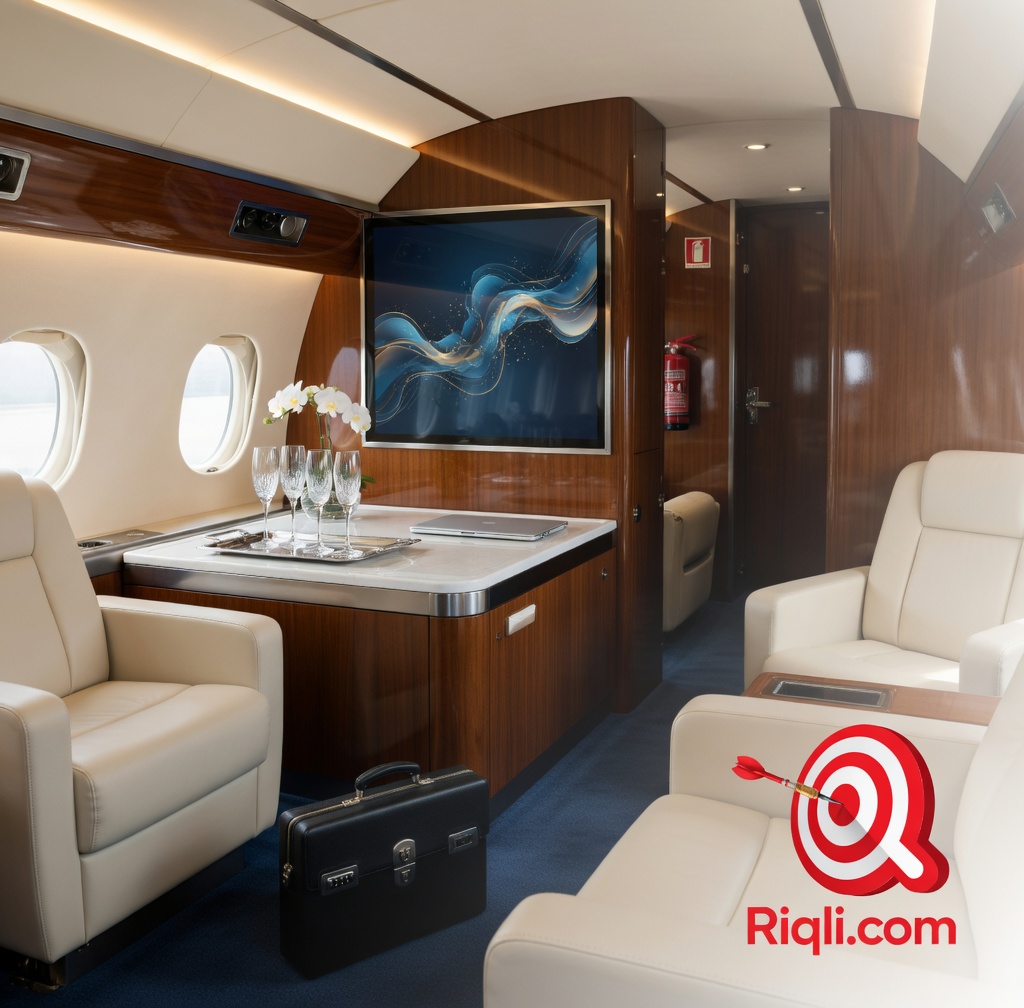
Ideal salon: Cabin Presentation. Cabin Presentation is the art of preparing the salon for receiving guests. This is the calling card of the entire team. An ideal salon is not just cleanliness, it is absolute symmetry, shine, freshness and comfort. Start with deep dry and wet cleaning: all surfaces (leather, plastic, glass, metal) must be cleaned and polished. Check all interior elements: headrests, tables, portholes, sockets, seat control panels. Nothing should be broken or scratched. Use antistatic screen cleaners and special lint-free mirror wipes. All serving items (dishes, vases, menus) must be placed strictly symmetrically, as in a display case, at the same distance from each other.
Pre-flight preparation algorithm (60 minutes): 1) Cleaning and polishing. 2) Making up chairs and laying out blankets (fold them in a corporate style, for example, “cuff”, so that the guest can easily unfold). 3) Setting the climate and lighting (select the scenario: “meeting”, “relaxation” or “sleep”). 4) Placement of flowers (live plants are preferable, but high-quality compositions are also acceptable) and candles (a safe option is electric ones with batteries). 5) Checking the operation of all electronics (TV, Wi-Fi, sound). Pay attention to the details: the menu should be printed on high-quality paper with the operator’s logo, the water should be in glass bottles, and the blankets should smell fresh (wash them after each flight).
Modern high-tech: use applications to control the cabin if they are installed on a tablet (for example, Boeing Cabin Systems). They allow you to quickly adjust settings from one point. Anti-pattern: don't overdo it with flavorings. Use a light, neutral scent (such as cotton or green tea) that does not irritate or overpower the food.
First Aid. In business aviation, you are often far from ground ambulances, so First Aid skills are critical and mandatory. This is not only a certification requirement, but also a responsibility. The course should include: cardiopulmonary resuscitation (CPR) for adults and children, the Heimlich maneuver, stopping bleeding (tourniquet, pressure bandage), immobilization of limbs, treatment of burns, allergic reactions (including the use of an auto-injector with adrenaline - EpiPen), epileptic seizures. You must be able to use a complete first aid kit, which includes oxygen tanks, an automated external defibrillator (AED), and necessary medications.
Emergency Procedure (ABC): 1) Airway - check and clear. 2) Breathing - check if the person is breathing. 3) Circulation - Check pulse and circulation. Immediately contact the pilot or dispatcher for emergency assistance at the landing site. It is important to remain calm and convey it to passengers. A loud, clear voice and confident movements can save lives, even if you're a little worried inside. Renew your first aid certifications regularly (every 6 months) through Red Cross courses or local aviation centers.
Maintain your skills by mentally replaying scenarios once a month (e.g., “what should you do if you have a heart attack?”) and checking expiration dates on medications in your first aid kit. Knowing which first aid kit is assigned to your type of aircraft (for example, for the Dassault Falcon the standard set is MedAire) will allow you to quickly find what you need. Never decide to take medication on your own unless it is in accordance with protocols - your job is to maintain your condition until doctors arrive.
Introduction to Aviation Security. Aviation Security is the foundation on which the entire trust service is built. Your main task as a flight attendant is to ensure the safety of the flight on board. This includes a pre-flight inspection of the cabin (search for foreign objects, control of closing hatches and locks), checking the operation of emergency equipment (fire extinguishers, oxygen masks, axes, light signals), instructing passengers on safety rules (fastening seat belts, location of exits) and constant monitoring of passenger behavior. You must be able to recognize potentially dangerous situations: inappropriate behavior, threats, terrorist attacks. Your response to any threat must be quick and precise.
Key procedures: Before departure, conduct a “walk-around” of the cabin, visually checking all compartments. Make sure emergency exits are accessible and not blocked by luggage. Check the connection with the pilots - the intercom should always be on. It is important to know the evacuation plans for each type of aircraft (where the emergency exits are, how the doors open). Review Flight Documentation: Flight Attendant Operations Manual (FCOM). Always carry a flashlight and whistle. In an emergency, your main weapon is your voice: you must command the evacuation clearly and with authority.
Modern threats are not only technical failures, but also cybersecurity (Wi-Fi protection, cameras) and medical risks. Use proven training platforms such as ATA (Airline Transport Association) to access up-to-date guidance. Regularly participate in emergency rescue training in full-motion simulators. This will help automate your actions in a stressful situation.
Test Questions and Answers
What is the main difference between world-class service (“World-Class Service”) and standard service in business aviation?
Using more expensive foods and drinks.
In anticipating the guest's wishes and personalizing every action, rather than simply following instructions.
Although expensive products are part of the VIP service, its essence is the ability to read the guest and offer a solution before he asks. This creates a feeling of exceptional care, which is the main value of World-Class Service.
In more frequent smiling and politeness.
What is the algorithm for working with a catering company when ordering food?
Call the restaurant, dictate the menu and sign the delivery note upon receipt.
Receive a request, agree on details, check availability and timing, carry out visual and temperature control on board, sign the acceptance certificate.
This is a simplistic and risky approach. In a professional environment, a clear structure is required: receiving a request, coordinating details with catering, double checking the availability of dishes, monitoring temperature and quality upon acceptance, only then signing the act.
How to properly serve a glass of champagne to a guest to match the luxury service?
Show the bottle, name the vintage, open quietly, pour a little for testing, then top up to the middle of the glass, place the bottle in a bucket of ice.
Serving in the “Lux” style is a ritual that demonstrates respect for the guest. Cotton is considered a sign of inexperience, and the correct ratio of ice and water in the bucket maintains the ideal temperature. All actions must be smooth and silent.
Open the bottle loudly to create a festive atmosphere and immediately pour a full glass.
What is the main task of a flight attendant when communicating with an international audience according to the principles of cross-cultural service?
Learn the language of each guest so that you can speak to them without an accent.
Adapt to the guest's cultural norms and taboos (such as serving with the right hand in Muslim countries) while remaining flexible and professional.
Who is this course for.
This course is designed for aspiring and existing flight attendants who want to move into the business aviation segment and serve VIP-level passengers. It will be useful to graduates of aviation schools, commercial aviation flight attendants who want to improve their skills, as well as professionals from related hospitality sectors (hotels, restaurants) who want to master the specifics of working on board private aircraft. The course will provide a solid foundation for those who value attention to detail and strive to become experts in the field of premium service.
The program is not intended for those who are looking for simplified instructions or are not ready to learn a large amount of information about protocol, safety and gastronomy. If your goal is to obtain a non-immersion certificate or you don't plan to work with a demanding international audience, this course may be overkill. We count on motivated students who are ready to invest time in their development and reach a new career level.
What is the main difference between world-class service (“World-Class Service”) and standard service in business aviation?